Unlocking Winter Magic: Designing with Snowflakes and Ice Backgrounds
There is a specific kind of stillness that defines the winter season—a visual quietness that relies heavily on texture rather than loud color. For designers, capturing this ephemeral atmosphere often proves difficult. Stock imagery can feel generic, and flat digital colors rarely convey the complexity of frost or snow. This is where high-quality digital assets become essential tools in a creative arsenal. A dedicated collection like the Snowflakes and Ice Winter Backgrounds offers a practical solution for anyone needing to inject that crisp, seasonal atmosphere into their work without spending hours rendering custom textures.
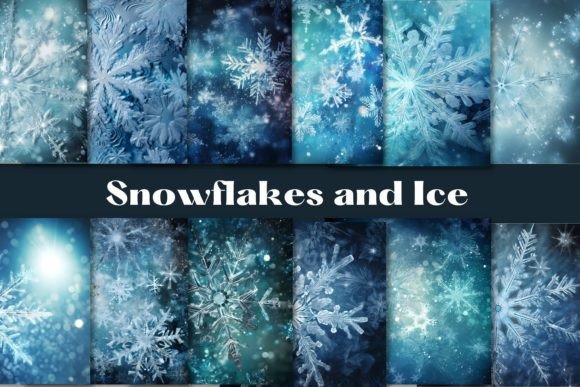
This collection is not merely a set of blue squares; it is a curated assembly of 15 distinct visual environments. The appeal lies in the intricate details: the crystalline structures of individual snowflakes, the jagged, organic edges of forming ice, and the soft, diffused light that characterizes a winter morning. These are high-resolution assets, sized at a substantial 4096 x 4096 pixels. This dimension is critical for modern design work. It ensures that the images remain sharp whether they are viewed on a high-density retina display or printed on large-format signage. The visual personality of these backgrounds leans towards the organic and textural, offering a counterpoint to the rigid geometry of modern typography and clean vector layouts.
Visual Character and Style Integration
When we look at the visual hierarchy of a design project, the background plays a supportive role, but it must be strong enough to set the mood. The Snowflakes and Ice Winter Backgrounds set excels in providing a rich canvas that doesn't overwhelm the foreground content. The textures vary from the soft, powdery look of fresh snow to the sharp, glass-like refractions of ice. This variety is the "font family" equivalent for texture; it allows you to select the exact "weight" or "style" needed for a specific project.
Integrating these assets requires an understanding of contrast and readability. Much like pairing a serif font with a sans serif font to create visual tension, you need to pair your text elements against these textures carefully. For instance, a bold, geometric display font often works best against the chaotic, organic patterns of ice crystals. The clean lines of the typography cut through the visual noise of the background. Conversely, a flowing script font or handwritten font can blend beautifully with softer, snow-dusted backgrounds, creating a romantic, cozy aesthetic often seen in holiday branding.
Practical Applications Across Industries
The utility of a versatile background set extends far beyond simple greeting cards. For the small business owner or entrepreneur, these assets are foundational for a seasonal rebrand. Imagine a coffee shop or a boutique clothing store launching a "Winter Warmer" campaign. Using these high-quality backgrounds for social media graphics creates an immediate atmospheric connection with the audience. The consistency of using the same set of 15 coordinating papers ensures that your Instagram grid or Facebook banner looks cohesive, reinforcing brand identity without looking repetitive.
For publishers and content creators, the application is equally potent. Digital magazines, e-books, and blog headers often suffer from a lack of tactile quality. A textured background can add depth to an editorial layout, making the reading experience feel more immersive. In web design, these images serve as excellent hero backgrounds for landing pages, provided they are optimized for load times. The high resolution allows for cropping and scaling without loss of quality, which is a lifesaver when adapting designs for different screen ratios.
Furthermore, the physical crafting community remains a massive market. These files are designed as digital papers for scrapbooking. Because they are delivered as high-quality JPGs, they print beautifully on standard home printers or professional press machines. The "non-seamless" nature of these specific papers is actually a benefit for print projects; it means each image is a complete, self-contained composition with a focal point, rather than a repeating tile. This makes them ideal for the front of a greeting card, a gift tag, or a framed piece of art.
Strategic Design Considerations
To get the most out of the Snowflakes and Ice Winter Backgrounds, consider the principles of modern typography and layout. One of the biggest mistakes in using textured backgrounds is failing to establish a clear focal point. When the background is busy, your typography needs to work harder.
- Legibility First: If you are overlaying text, consider using a semi-transparent overlay or a "knockout" shape to ensure the text remains readable. A white sans serif font on a pale blue icy texture might disappear, but the same font in a deep navy or charcoal will pop.
- Layering for Depth: Don't just slap a background down and place text on top. Use the textures to create depth. For example, place a snowflake texture in the background, a solid color block in the middle, and a smaller ice texture element in the foreground. This creates a 3D effect that feels professional and polished.
- Color Grading: While the backgrounds come in their native winter palettes, don't be afraid to adjust the hue and saturation in your editing software to match your specific brand identity. A slight shift towards teal or purple can completely change the mood from "Christmas cheer" to "futuristic tech."
Evaluating Fit and Workflow
Before committing to a set of design assets, it is wise to evaluate how they fit into your current workflow. Because these are raster images (JPGs) rather than vector files, they are best used for surface design and backgrounds, not for creating logos or scalable icons. For logo design, you would typically use these textures to create a mockup—showing how a logo might look on a textured business card or a winter flyer—rather than incorporating the texture directly into the logo mark itself.
The coordination of the 15 files is a significant time-saver. In packaging design, for example, you might use one specific paper for the box exterior and a different, coordinating paper for the interior lining. Because they share a similar color palette and lighting style, the final product looks intentional and high-end. This level of cohesion is difficult to achieve when sourcing random images from the internet.
Ultimately, the value of the Snowflakes and Ice Winter Backgrounds lies in their ability to instantly transport a viewer into a specific season. They provide the texture and atmosphere that flat design often lacks. Whether you are a marketer planning a Q4 campaign, a crafter making personalized gifts, or a designer building a holiday website, having a library of high-resolution, atmospheric textures is not just a luxury—it is a practical necessity for producing professional, engaging work.